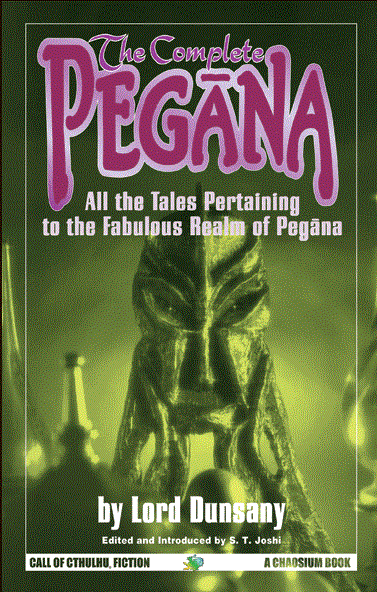
Showing posts with label Mythos Project. Show all posts

Tuesday, March 20, 2018

Chaosium Mythos Covers and the Chaosium Mythos Fiction Project


   I'm not sure if I'll ever complete my Chaosium Mythos Fiction Project, something I abandoned after only four posts (not counting an early non-project review I did of the The Scroll of Thoth). Even though I made it to the most excellent Mysteries of the Worm by Robert Bloch, struggling through the most execrable The Xothic Cycle by Lin Carter knocked the wind and the snot out of me. 

   Still, they those books, all 33 of them, call to me, chillingly, enticingly, from their place on the top shelf, every now and then as I walk past them to the attic. I hear their papery whispers summoning to pull them down and peruse secrets man was not meant to know. To once again hear the Dhol Chants, wander the streets of Ulthar, and spy upon the towers of Y'ha-nthlei beneath the ocean's waves. You know, the normal stuff books do.


   Lately, as I've been listening to a podcast about HPL, those voices from above have pulled with a little more vigor. Some of the collections are really very good, especially the ones inspired by Ramsey Campbell and Brian Lumley's Mythos stories. There's a lot of dross between some of those covers, but there's also some really top-grade stuff, some of it by people no one's ever heard of. I'd really like to go back to the project, but we'll have to see what happens.

   Robert Price and all the other editors did a really good job scouring the world for great stories. A lot of the bad stuff, especially in Price's volumes arises from the desire to present a complete history of Mythos fiction, meaning whether you want it or not, August Derleth's and Lin Carter's stories get included. Like 'em or not, they're important to the development of Mythos fiction as its own genre. 

   It doesn't just stop there, though. Price in particular was intent on using the collection he put together to explore Lovecraft's fiction as part of a greater context that stretches before and after his stories. For an full example of what I mean, read the post on The Hastur Cycle. Price includes writing from Ambrose Bierce, Arthur Machen, and Robert Chambers and shows exactly where some of HPL's ideas and names came from. I don't agree with everything he says, but in the scheme of Mythos fiction, they're important collections and his arguments bear listening to.

1. Chaosium's Mythos Fiction 11/9/2014 
2. Chaosium Mythos Fiction: Have You Seen the Yellow Sign? : The Hastur Cycle, edited

The Covers: The early releases' covers were by Dreyfus, aka Andrew Caines. They're not bad, but not anything we haven't seen before. They made the books look more like gaming supplements than fiction.  

It was with the later edition covers by H. E. Fassl that the series took on a distinctive look. I don't know what techniques he employed. It looks like he sculpted sets and figures and made dioramas he then photographed. The sculpted pieces remind me of Clark Ashton Smith's creations. However he did them, they possess an eerie, organic quality that is deeply weird. They're a far cry from the pulpiness of the first covers or the later one. Instead, Fassl's work looks to the surrealness of Mythos fiction. Funny enough, though, my favorite is one that doesn't appear to be a diorama: Nameless Cults. Just what the heck is that screaming mouth mounted on, an egg? Very, very freaky. It's a shame they weren't able to have him do all the covers and give the entire series a unified, and very particular look.


Tuesday, March 24, 2015

Chaosium Mythos Fiction: Mysteries of the Worm (2nd ed.) by Robert Bloch

Baby Bob Bloch
After weeks of delay brought about by travel, cataracts, other obligations, and, above all, laziness, I finally finished Mysteries of the Worm by Robert Bloch. It's name is the English version of Bloch's contribution to the Mythos' library of evil volumes: De Vermis Mysteriis by Ludwig Priin. As edited by Lin Carter, it originally appeared in 1981 from Zebra Books. Both later editions had a few stories added by our hero, Robert Price, and were published by Chaosium. I've read the 2nd edition, depriving myself of four more bits of Mythos writing.

He wrote most of the stories in the collection before he was twenty-two. Some barely rise to the level of story, really being nothing more than a nifty idea but lacking much in the way of plot. Only a few are great, the rest being the work of a novice writer. And I don't care.

There's more atmosphere, more thought, and more originality in almost every one of Bloch's stories than any of those I struggled with in Lin Carter's Xothic Legend anthology. Bloch was still a teenager and there's an intimation that he will be a better storyteller someday. With Carter's stories, it's evident that he had reached his limits.

Pt. I


Robert Bloch (1917-1994) is still, sadly, really only known to the wider public (if at all) as the author of Psycho. Even that laurel is faded as it's Hitchcock's movie that people know best. Apparently he only merits a mention in the recent film, Hitchcock, about the creation of the movie.


What most people don't know is that he started his writing career as a sixteen year old member of the Lovecraft Circle. He had written to HPL in hopes of securing copies of older stories that were no longer available. HPL not only sent him copies, he also encouraged the young Bloch to start writing.

Later, Bloch started writing suspense and horror fiction that was more psychological and less supernatural. That path led to Psycho which ultimaltely seems to have led to Hollywood. There he wrote tons of TV scripts as well as several films. Several of Amicus Productions dynamite horror anthologies were written by Bloch. Asylum remains a favorite of mine. And he never stopped writing original fiction. His last novels, Psycho House and The Jekyll Legacy (co-written with Andre Norton), were published in 1990.

Pt. II
In his introduction, Robert Price makes a defense of the authors who dedicated themselves to systematizing the Lovecraft Mythos, especially Derleth, Carter, and Lumley. The post-Derleth reformers insisted:

the cataloguers have misunderstood what a "mythos" is. They maintain that certain stories by Lovecraft or others may draw on this body of myth, but the Mythos refers to the pseudo-information, not to the stories that draw on it

But there are no real tomes of mystery or actual myths and legends to the Lovecraft Mythos notes Price. The stories we are reading by Carter, Bloch, and others are what really compose the Mythos.


As such, while Bloch's creation, De Vermis Mysteriis by Ludwig Priin doesn't actually exist, Price believes Carter's decision to title the collection after it is perfect, stating "The stories of the Mythos are the Mythos!" It's a line of reasoning I like.

Other than that, there's not much further exploration of the theory Price put forward in The Hastur Cycle, that the "true" Mythos is something that preceded and extended past HPL's own stories. All Carter wanted to do when he created Mysteries of the Worm was to get a bunch of stories he loved by a member of the Lovecraft Circle together in one place.

In his "unauthorized" autobiography, Once Around the Bloch, Bloch wrote that as he had few ideas and no style of his own, when he started he tried to emulate his idol, HPL. And that's what you get in much of Mysteries of the Worm.

These are pulp stories, most written for Weird Tales. You can practically smell the ink and cheap paper as you read them. There's an audio clip of Bloch explaining how he would start with a finale for a story and then work out how he got there. It's easy to imagine him doing that in many of these stories.

In one story, a man kills himself  but the knife he uses is revealed to have the fingerprints of a gigantic ape. In another, a man learns his friend has been strangled by the little monster living on his back. In "Notebook Found in a Deserted House", my favorite in the book, you get exactly what the title describes. All cool ideas that Bloch must have had fun working back to the beginning.

So what to make of the actual stories? For all the rough edges and unsurprising surprises, the earliest stories still have a nice zip to them. While he was trying to emulate his mentor, there's still a leanness to Bloch's prose that's similar to what he would develop as a mature writer.

It's also easy to see that maturity starting to emerge over the course of the book. While Bloch mimicked HPL in the first story, "The Secret in the Tomb", by "The Secret of Sebek" from two and a half years later the narrator is self-aware enough to notice when he find himself talking old-timey all of a sudden. It's not that he's dismissive of HPL's more florid style, but that he's finding his own prosaic one. You can see the taut, more naturalistic prose that's the hallmark of his later thrillers and horror stories coming into being.

Several of the stories are linked, not as direct sequels, but by an Egyptian theme. It first appears in "The Faceless God." Bloch plays with Nyarlathothep as a deity worshipped in ancient Egypt under the priesthood of the dark pharaoh, Nephren-Ka. The latter, as Prices points out, is presented as an evil doppelganger of the monotheist ruler, Akhenaten. Like him, Nephren-Ka was struck from all the histories and monuments, but for vile sins and depravities, not simple heresy.

In the Egyptian stories, Bloch does desert adventure in "The Faceless God", dark secrets in the wild English countryside in "The Brood of Bubastis", and a riff on Poe in "The Secret of Sebek." As in all of Bloch's Mythos stories, the emphasis is on the pulp aspects of the whole enterprise. Bloch admits that his knowledge of historical Egypt was pretty lousy, but really, if there are enough animal-headed mummies and secret tombs, who cares?

Much as some critics go on about the depth of meaning to HPL's stories, what brings most people in I would argue, are the monsters and madmen. Sometimes, readers need to be reminded of this cobbled-together thing's roots.

For all the brooding existential dread that permeates the Mythos, there's also a great sense of play present as well. There's a whole lot of meta-storytelling going on from the very beginning. HPL gave himself and his correspondents nicknames. Lovecraft put some of his friends into the stories and allowed himself to be used by them in turn. In "The Shambler from the Stars" Bloch portrayed HPL as a "mystic dreamer" from New England and killed him off.

Lovecraft got his own back, killing off the Bloch stand in, Robert Blake, in "The Haunter of the Dark." Bloch later wrote "The Shadow from the Steeple," a direct sequel to "Haunter." Both of Bloch's are pretty decent.

It's a kick to witness the literary results of Bloch's and Lovecraft's interaction. They were hoping to write good spook stories, but they were in constant conversation with each other. What Bloch and Lovecraft did, killing each other off, is a lot more enjoyable than Derleth and Carter simply listing all the books from each other's haunted library shelves. 


As good, and as much fun, as Bloch's early endeavors are, it's two of the later stories that are the best in Mysteries. The first of these, and easily my favorite non-HPL Mythos tale, is "Notebook Found in a Deserted House." I first read it in theTales of the Cthulhu  Mythos Vol. 2 with the creepy John Holmes cover. I was probably fourteen when I first read it and was glad to find it held up when I reread it last week.


A boy goes to live with his aunt and uncle in the deep woods. Deep woods where awful things apparently lurk, hiding and waiting for dark and awful purposes. It's not a perfect story, with the juvenile narrator writing in his notebook right up until something smashes down a door (I hope you don't think I'm giving anything away by writing that. This is a Mythos story and you do know how they pretty much all end, right?). But there's a great, creeping feeling of dread and rising fear in the story that's terrific.

The final story, "Terror in Cut-Throat Cove," bridges the gap between Bloch's more traditional Mythos stories and his noir-tinged non-supernatural tales. An American expatriate living on a Caribbean island is approached by an American couple to help out on a dive for a Spanish wreck. Things don't go well.

Pt. III

These are not the finest crafted Mythos stories. The earliest ones suffer from clunky writing and derivative plots. But they breathe, there's life in them that many other Mythos writers never found. Bloch's skills developed quickly, and within a few years he was crafting well-written and clever stories that supply a nice jolt.

Bloch never abandoned his love for HPL's creation. In 1978 he wrote Strange Eons. It's a goofy book that tells of the final rising of dread Cthulhu by weaving together incidents from HPL's own tales. It's not scary or disturbing, but it is a lot of fun. It was published by Whisper Press, an arm of the great and mighty Whispers magazine.

Bloch at the Other End of Life
If you have any interest in Robert Bloch or Mythos fiction, buy yourself a copy of Mysteries of the Worm. I'll probably upgrade my copy to the newest edition in the future. The Hastur Cycle is a collection with a more serious purpose (to prove Price's theory regarding the nature of the Mythos as a body of stories), and several stories that aim for loftier artistic goals than Bloch's, but that leaves that volume a little drier and almost academic compared to this one. This book is just much more fun, and, really, that's why I read these stories.


Next Time: Cthulhu's Heirs: Tales of the Mythos for the New Millennium, edited by Thomas M. K. Stratman

Tuesday, January 6, 2015

Chaosium Mythos Fiction: I Surrender: The Xothic Legend by Lin Carter

I set the folder aside as weariness overcame me.
                             from "Out of the Ages"


That line from one of Lin Carter's own Mythos stories describes exactly how I've come to feel about this book. Try as I might, even though bolstered by editor Robert Price's encouraging introduction to the book and each story, I was unable to work up any real enthusiasm for this book. I've read lots of atrocious Mythos stories over the decades but Lin Carter's are possibly the worst.

Instead of trying to mimic Lovecraft's storytelling style, or even August Derleth's, Lin Carter appears to have reached the conclusion that Cthulhu Mythos stories work best when they consist of long lists of difficult to pronounce names or the titles of fictional compendiums of forbidden lore.

Whether in the Dunsany-flavored "The Red Offering" set in primeval Mu, or the tales set in 1930's California, his approach is the same: throw some names at the reader and then show how every bit of Lovecraft minutiae is connected to every other bit. It's not a winning situation for the reader.

If you're a regular reader of this site or my Black Gate reviews, you know I've been on a bit of a Lin Carter tear of late. I would never argue that he's a lamentably overlooked author, but I was starting to hope he was a better one than I remembered from early encounters with his stories, as well as the general reading public.

While my recent reading of his first two Thongor (his tribute to REH's Conan and ERB's John Carter rolled up in one) was painful, I can tell you the Thongor short stories are great fun. Kellory the Warlock and the first Zanthodon novel were also entertaining. In that light I figured how bad could this be. The answer is, really, really, really bad.

The book's title derives from Xoth, the star from which Cthulhu, his wife, Idh-yaa arrive. Okay, maybe she's only his common-law spouse, but they do have three kids together: Ghatonothoa, Ythogtha, and Zoth-Ommog. In the past they were worshipped by the citizens of Mu but now they are imprisoned. Their interaction with humanity comes through dreams and various servitors, like the wormlike Yuggs. Between them they've got lots and lots of tentacles.

The first batch of stories are tied together in what could have been an interesting way. In "The Red Offering" Carter introduces the Muvian sorcerer, Zanthu. In "The Dweller in the Tomb", an archaeologist goes searching for Zanthu's tomb. The following stories describe the fates of those who come into contact with or followup on the knowledge gleaned from the ancient grave site. Not very original, but interesting. Well, potentially.

That said, I'm throwing in the towel on The Xothic Cycle. I can't handle finishing this book. Even with the prospect of two Robert Price stories towards the end, I just can't do it. 

Instead of telling you why I'll just show you.

From "The Horror in the Gallery"

"Yes," Dr. Armitage nodded. "We have here at the library perhaps the greatest collection of books and documents regarding the Cthulhu mythology that exists in the entire world - probably the finest and most comprehensive collection ever compiled. Beside old Alhazred, we have Prinn and von Juntzt, the Pnakotic Manuscripts, the Norman French version of the Book of Eibon, the Celaeno Fragments, Cultes des Goules, both the R'lyeh Text and the Dhol Chants, the Hsan, the Cabala of Saboth and the Egyptian Black Rites, Porta, Remigius, a manuscript copy of Winters-Hall's translation of The Sussex Manuscript, a few pages of the Invocation to Dagon, and other works as well."

That same sort of list occurs time and time again throughout the half of the book I managed to read. Even "Perchance to Dream", a fun story starring Carter's simulacrum of Seabury Quinn's Jules de Grandin, Anton Zarnak, is marred by lists of names and books:


Zarnak consulted the books in the library. First he looked into a slim, cheaply produced pamphlet which bore the title The Zanthu Tablets and read of Great Ythogtha, the Abomination in the Abyss, imprisoned by the Elder Gods in Yhe. Then he consulted von Juntz, and found the following passage of interest:
Of the Spawn of Cthulhu, only Ythogtha lies prisoned in regions contiguous to sunken R'lyeh, for Yhe was once a province of Mu, and R'lyeh, is not far off the submerged shores of that riven, drowned continent; and Yhe and R'lyeh are close nigh unto each other, along dimensions not numbered among the three we know.


Carter seems constitutionally unable to refrain from explaining everything. There's no room for mystery in these stories. Since he hewed as closely to the story templates created by HPL (ex. find secret lore/object and go mad or discover unknown family connection to Mythos), the conclusions to every story are pretty much clear from the first paragraph. To make this sort of story successful, by which I mean fun to read, you've got to mix it up in the middle. 

That means there needs to be atmosphere or action or creepiness to make your time investment worthwhile. Leave some room for mystery to allow the reader's brain to fill in the gaps with it's own dread fantasies. That doesn't happen. 

So, despite all my best intentions and efforts, I'm walking away from this one. But it's okay. I started Robert Bloch's Mysteries of the Worm and it's already better. Eighteen year old Robert Bloch was a better writer than adult Lin Carter. It's exhilarating to go from one to the other and I'm already feeling better for it.

I'm also going to read the rest of the series in order as Price produced it. He had clear goals and plans in mind when he edited the books. Several of his introductions in The Xothic Legend make references to stories and ideas in earlier collections. Read out of sequence I don't think I'd get the full effect and defense of his theories that Price intended.

For what it's worth, I read the following stories from The Xothic Legend.

The Red Offering - Crypt of Cthulhu #7 - 1982
The Dweller in the Tomb - Dark Things - 1971
The Thing in the Pit - Lost Worlds - 1980
Out of the Ages - Nameless Places - 1975
The Horror in the Gallery - The Disciples of Cthulhu (as "The Terror Out of Time" - 1976
The Winfield Heritance - Weird Tales #3 - 1981
Perchance to Dream - Crypt of Cthulhu #56 - 1988
Strange Manuscript Found in Vermont Woods - Crypt of Cthulhu #54 - 1988
Something in the Moonlight - Weird Tales #2 - 1981

I did not read the poems "Dreams from R'lyeh"

Next Time: Mysteries of the Worm: Early Tales of the Cthulhu Mythos by Robert Bloch