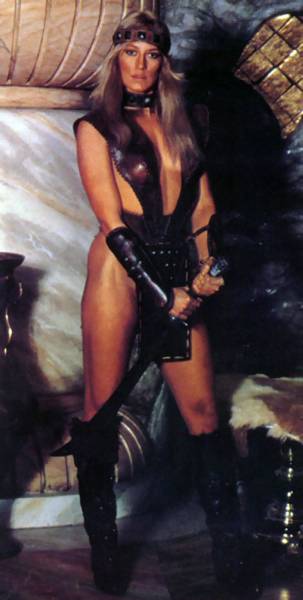
To come across such an exciting S&S writer and character that I'd never even heard of seemed impossible. Clearly, since I hadn't, it wasn't. Within six months I'd tracked down the original Imaro books and was hooked. Over time I got my hands on some of his stories published in various anthologies. Not only was he writing S&S worthy of mentioning in the same breath as Conan, Fafhrd and Kane, Saunders was showing how to expand the field's horizons.
Later I learned about the problems Saunders had suffered getting Imaro into print and keeping him there. Just reading about his experiences is frustrating. I was disappointed to learn he'd more or less left the genre and turned to journalism.
When Night Shade Books (let's all bow our heads in silence for a moment while keeping our fingers crossed) announced they were not only planning to reprint the original Imaro trilogy but brand new volumes as well I sent them my money as soon as they'd take it. When the NSB stuff fell apart before the third book, "The Trail of Bohu", was reprinted due to low sales I was pissed off greatly. I wanted to read new stories from Saunders and now it looked like there was to be nothing. Personally, I would have just given up at that point.
Fortunately, Charles Saunders was made of sterner stuff than I am. He'd also returned to S&S just as the whole publishing business was changing. Over the next few years he put "The Trail of Bohu" back in print and published its sequel, "The Naama War". Since then there have been new shorts stories and a two-fisted pulp novel, "D'amballa" from a writer who'd been away for far too long.
Saunders also resurrected and continued the adventures of a second original character, the ahosi Dossouye, a woman soldier in a royal army. Back in 1979, he had created a sword & soul heroine to walk alongside Imaro (metaphorically, at least). Dossouye's first story, "Agbewe's Sword", appeared in Jessica Amanda Salmonson's landscape altering "Amazons!". She reappeared on the pages of several volumes of Marion Zimmer Bradley's "Sword and Sorceress". Until a reprint of "Gimmile's Song" in the first "Dark Matter" anthology and a new story in the second, she'd been away from public view for nearly twenty years.
Saunders also resurrected and continued the adventures of a second original character, the ahosi Dossouye, a woman soldier in a royal army. Back in 1979, he had created a sword & soul heroine to walk alongside Imaro (metaphorically, at least). Dossouye's first story, "Agbewe's Sword", appeared in Jessica Amanda Salmonson's landscape altering "Amazons!". She reappeared on the pages of several volumes of Marion Zimmer Bradley's "Sword and Sorceress". Until a reprint of "Gimmile's Song" in the first "Dark Matter" anthology and a new story in the second, she'd been away from public view for nearly twenty years.

In 2008 the fix-up "Dossouye" appeared. It collected the original Dossouye stories and added a brand new one, "Obenga's Drum". Its cover art by Mshindo I. Kuumba was a ferocious image of Saunder's heroine in mid attack. Produced by the machinery of self-publishing house Lulu and Sword and Soul Media and filled with exciting stories, "Dossouye" was everything a sword & sorcery book should be.
Dossouye is an ahosi, a female soldier in the army of Abomey. The concept is taken from the ahosi warriors of the historical West African kingdom of Dahomey.
At the book's outset, Abomey is preparing for an invasion by the warriors of Abanti and that kingdom's bukur, a terrible practitioner of evil magic. Only possession of the legendary sword of Agebwe can prevent Abomey's fall. Chosen in a dream, Dossouye is sent out of the kingdom to find and recover the sword.
"Agbewe's Sword" is a mini-epic complete with a quest, betrayals, powerful magics and stunning fights and giant battles. Dossouye appears as an almost meek servant of her king and emerges a powerful figure ready, even if reluctantly, to find a new path in an unknown world.
In the end, jealousy brings disaster on Dossouye. Tradition and fear of the prestige she wins in the war against Abanti force her to leave Abomey. The exiled ahosi is drawn by circumstance into the great forest that covers much of interior of the great continent of Illodwe.
The stories that follow are as small in scale as "Agbewe's Sword" is vast. Instead of focusing on Dossouye's quest to recover a magic sword and defend her homeland, they're about her efforts to find her place in world where the traditions her identity was built on have been destroyed.
In "Gimmile's Songs" and "Marwe's Forest" Dossouye finds and loses love. In "Shimenge's Mask" and "Yahimba's Choice" the ahosi is forced to make decisions with possibly terrible results. In the new and final story, "Obenga's Drum", she learns of and is tormented by the consequences of one those decisions.
In "Marwe's Forest" and "Obenga's Drum" there are beautiful images of the great forest and its deepest, most hidden regions and inhabitants. In "Obenga's Drum" the trees are "so tall that their foliage appeared only as a jade cloud". It's a place teeming with life. Troops of monkeys swing through the lower branches and high above, the great apes. In the heart of the forest, man is noticeable only by his absence.
In the first story, Dossouye meets an ancient, supernatural being and for a short time finds peace and love. In the second tale, while traveling through the gigantic mtuni god-trees in the rain forest's heart she rescues and, in turn, is rescued by the diminutive Emibiti people. Here too she finds a measure of peace, given it in return for her actions.
Now, don't think what I'm describing are just hearts and sunshine tales. These are still stories with plenty of action and excitement. There are several types of demons, brutal bandits, shapechangers and dinosaurs. Oh, and Dossouye rides a great war-bull named Gbo.
Charles Saunders' isn't writing poetry, but stuff that's bold and vivid. Whether he's presenting the clash of armies:
"Even as sheets of arrows flew overhead, the cavalry of both armies were the first forces to engage, crashing against each other like opposing ocean waves."
or a single warrior's engagement:
"Dropping the war-bull's reins, she gripped the hilt of her sword in both hands. Then, with all the strength coiled in her back and shoulders, she swung at the neck of the mokele-mbembe as though she were chopping a tree."
he's sure to grab and hold you with his words.
 In several of the tales Saunder's creates some of Dossouye's adventures from real-world elements. In "Yahimba's Choice", Dossouye confronts the practice of female genital mutilation. She helps a young woman uncover the reasons behind its continued practice and lay the groundwork for ending it. "Obenga's Drum" the sorrowful and evil story of Ota Benga is used for that of the spirit-man, Obenga.
Time and again Dossouye meets others in places similar to her own. Several of her encounters are with people bound by traditions that bind too tightly or are built on untruths. Guided by her own sense of right and wrong and armed with bravery and a sharp sword, she steps forward to help them. For nearly every adventurous event in these stories there's one about moral or emotional choices.
Now as even cursory visitors to this blog must know, I'm a champion of the straight ahead S&S story. Gimme a strong armed hero, a well hefted axe and a monster or two and I'm a pretty happy camper. However, when done right, and Charles Saunders does that, there's a place for more ruminative stories. He proves a genre's only as limiting as an author is limited.
The most basic I like and recommend these stories is they're well told tales of adventure. The fights are exciting, the world is colorful and well depicted and there's a nice dash of horror thrown in as well. Charles Saunders knows how to hook you into the story and snap you back and forth like a great amusement park ride.
The second, is that Dossouye's not just another sword-swinger. Saunders has created an increasingly complex character who isn't just searching for the lost golden macguffin but for how to rebuild her soul.
Finally, I love that he's continuing to create venues for his stories different from the more usual European or generic fantasy ones. It's done without a whiff of exoticism. I have to admit, part of me doesn't even care about the inclusiveness or boundary expanding components of Saunder's writing and all the other swords & soul authors. I'm a little bit selfish and I just want stories that don't contain the same old overworked elements one more time. That said, the other stuff is pretty cool too.
Four years later a full length Dossouye novel appeared. Titled "The Dancers of Mulukau", it looks to be a continuation, if not completion, of the exiled ahosi's search for herself. I hope to get to it soon and report back when done.